

|
Getting your Trinity Audio player ready...
|
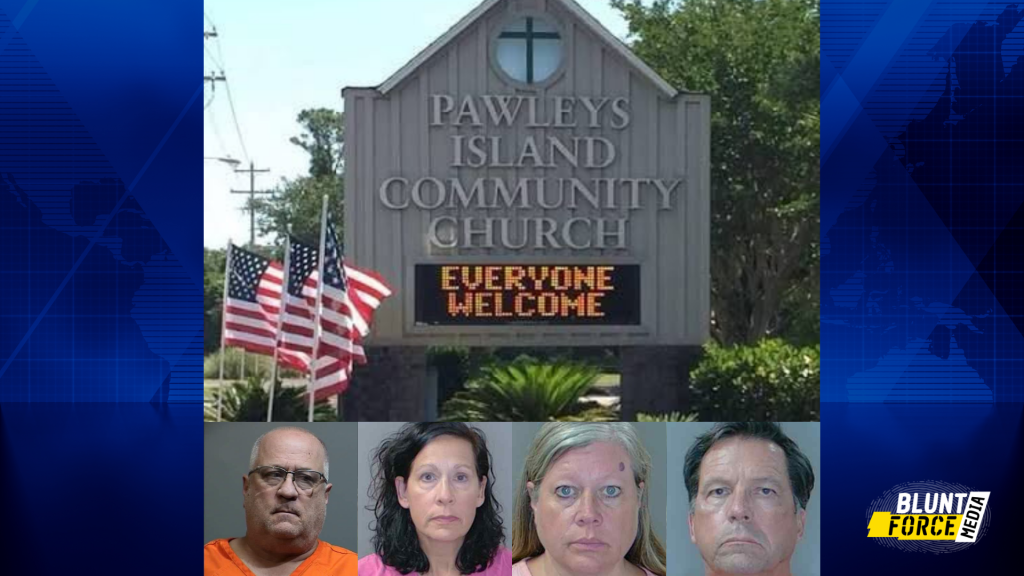
GEORGETOWN COUNTY, S.C. (BFMG) — The parents of a young child have filed a sweeping civil lawsuit against the South Carolina Department of Probation, Pardon, and Parole (SCDPPS), Pawleys Island Community Church, its affiliated Pawleys Island Christian Academy and multiple church leaders, alleging they knowingly allowed a convicted, registered sex offender to work in a role that gave him repeated, unrestricted access to children on campus.
The complaint, filed July 27 in Georgetown County’s Court of Common Pleas, accuses the church, the academy, former senior pastor Donald James Williams, staff members, church elders, the offender and the South Carolina Department of Probation, Parole and Pardon Services of negligence, gross negligence, reckless conduct and civil conspiracy among other claims. The parents, identified only as John Doe and Jane Doe to protect their minor child’s identity, say their son was enrolled at the academy during the time the offender worked at the church and school and that they may never know the extent of what he “saw, experienced, or may have been subjected to.”
Allegations Against Church and Academy
According to the 28‑page complaint, the church and academy marketed themselves to parents as safe environments and assumed a corresponding duty to protect children, particularly very young students who could not fully understand, report or protect themselves from danger. Despite those assurances, the parents allege the institutions “knowingly allowed” Warren Spence Perry — a man convicted in 2023 of sexual exploitation of a minor and listed on the sex offender registry — to serve in a volunteer, custodial, maintenance or similar role with daily access to children.
The lawsuit claims the academy had previously been cited multiple times by state regulators for background‑check and child‑safety deficiencies, including alleged citations in February 2024, March 2024 and March 2026, yet still failed to correct its practices. The parents say they paid tuition and fees for what they were told would be a safe, well‑supervised educational and childcare environment and were never informed that a registered sex offender worked on campus or that the academy had been cited for safety lapses.
Claims of Prior Warning and Internal Complaints
The filing asserts the church was put on notice nearly two decades ago when, under its former name Pawleys Island Baptist Church, it was sued over alleged failure to protect a minor from sexual misconduct by someone placed around children. pdf The parents argue that history, combined with more recent regulatory citations, should have heightened the institution’s awareness of the risks of placing inadequately screened adults around children.
The complaint also says at least one academy teacher raised concerns with leadership about Perry’s status as a registered sex offender and his continued presence around children. Instead of removing or restricting him, notifying parents or contacting authorities, the suit alleges, church and academy leaders “dismissed the concerns” and “forced out or silenced” the person who sounded the alarm. The filing describes this response as a “conscious failure to exercise even slight care” for child safety, rather than a mere oversight.
Role of Church Leadership
Named defendants include Pastor Williams, described as the senior pastor who exercised governance and supervisory authority over the church and academy and allegedly had actual knowledge of Perry’s conviction and registry status. The complaint states that Williams personally provided a character reference or other support to the probation agency on Perry’s behalf in connection with approval for his work or volunteer role at the church, and alleges that reference did not fully disclose the extent of Perry’s access to children.
Virginia Lee “Ginny” Williams is sued in her capacity as an employee and member of church leadership, and Jennifer “Niki” Howard is identified as the academy’s director responsible for day‑to‑day operations, including screening and supervising staff and volunteers. The parents allege Howard had actual knowledge that Perry was a registered sex offender and nevertheless permitted him to remain in a position with access to children. Ten unnamed “John Doe Elders” are also listed as defendants; they are described as members of the church’s governing elder board that held ultimate authority over the institution’s operations.
Allegations Involving Probation Agency
The South Carolina Department of Probation, Parole and Pardon Services is named as a governmental defendant under the state Tort Claims Act, accused of grossly negligent supervision of Perry following his November 23, 2023 sentencing. The complaint states that, under standard sex offender supervision conditions, Perry was prohibited from contact with minors and from working within 1,000 feet of minors, yet he remained regularly present on a church campus that also operated a school and childcare facility.
The parents allege the department failed to use basic monitoring tools to verify Perry’s work site, to investigate whether his activities complied with his supervision conditions, and to take timely enforcement action once it had actual or constructive notice of his access to children. The filing emphasizes that the claim against the agency focuses on “operational supervision” after sentencing and does not challenge judicial or discretionary decisions to sentence or release Perry.
Emotional and Financial Harm Claimed
Because their son was a very young child during his enrollment at the academy, the parents say they may never be able to determine what he experienced while a registered sex offender had access to him. The complaint asserts the child has suffered and will continue to suffer emotional, developmental and psychological harm, along with disruption of his sense of safety and the need for ongoing forensic and psychological evaluation.
John Doe and Jane Doe claim they have endured severe emotional distress, fear and loss of security, as well as financial losses related to tuition, transportation, and the cost of medical, psychological and developmental assessments for their son. The suit seeks recovery for those expenses under a “necessaries” cause of action, noting that the parents are legally responsible for their child’s care during his minority.
Legal Theories and Relief Sought
In addition to negligence and gross negligence, the complaint asserts causes of action for negligent hiring and retention, negligent misrepresentation, breach of contract and breach of the implied covenant of good faith and fair dealing, violation of the South Carolina Unfair Trade Practices Act, reckless infliction of emotional distress, corporate and institutional negligence, civil conspiracy and grossly negligent supervision by the probation agency. The parents argue the church and academy’s marketing of tuition‑based childcare and educational services, coupled with alleged misrepresentations about safety and background checks, amounts to an unfair and deceptive practice affecting the broader public interest.
The lawsuit asks for actual, compensatory, consequential and special damages against all defendants, punitive damages against all defendants except the probation agency, treble damages and attorneys’ fees under the unfair trade practices law, and economic damages related to the parents’ obligation to provide necessaries for their child. It also seeks only those damages from the probation agency that are allowed under the state Tort Claims Act, including any applicable statutory caps and limitations.
Constitutional and Ecclesiastical Issues
The complaint anticipates potential First Amendment defenses, noting that while the U.S. Constitution protects religious organizations in matters of faith, doctrine and internal ecclesiastical governance, it “does not immunize a church or school from liability for operating a childcare or educational enterprise in a negligent, reckless, or unlawful manner.” The parents argue that issues such as screening and supervising a registered sex offender, operating a childcare facility, and truthfully representing safety to parents can be resolved under “neutral principles of law” without entangling the court in religious doctrine.
The suit further addresses the possibility that the church or academy might claim charitable immunity or statutory limits on liability, arguing that reckless, willful and grossly negligent conduct by individual defendants should fall outside any legitimate charitable protection. The filing contends that each act and omission — from placing Perry in a role around children to allegedly suppressing warnings — represents a separate “occurrence” for purposes of determining damages.
Plaintiffs Proceed Under Pseudonyms
The parents are proceeding under pseudonyms, arguing that public disclosure of their identities would subject their child and family to humiliation, embarrassment and stigma and would amplify the harm already suffered. They say the public interest in knowing their names is minimal compared with the potential harm, and they note that defendants will receive their identities confidentially upon service of the lawsuit and appearance of counsel.
The case, filed under civil action number 2026‑CP‑22‑00755, is pending in the Fifteenth Judicial Circuit in Georgetown County, where the church and academy are located and where the complaint says the “most substantial acts and omissions” occurred. The parents have requested a jury trial on all issues so triable.
Powered By EmbedPress




















