|
Getting your Trinity Audio player ready...
|
WASHINGTON D.C. (BFMG) — February 3 marks National Missing Persons Day, a solemn observance dedicated to raising awareness of the thousands of individuals who vanish across the United States each year. This day not only brings attention to missing persons cases but also acknowledges the profound emotional toll on the families and friends left in limbo, grappling with uncertainty and grief.
The Significance of Missing Persons Day
The day serves as an opportunity for advocacy, urging the public to remain vigilant and engaged in efforts to locate missing individuals. It amplifies the voices of families seeking answers and encourages law enforcement agencies and communities to collaborate in solving these cases. Many organizations use this day to highlight unresolved disappearances, provide resources for affected families, and push for policy improvements in missing persons investigations.
Understanding the Scope of the Issue
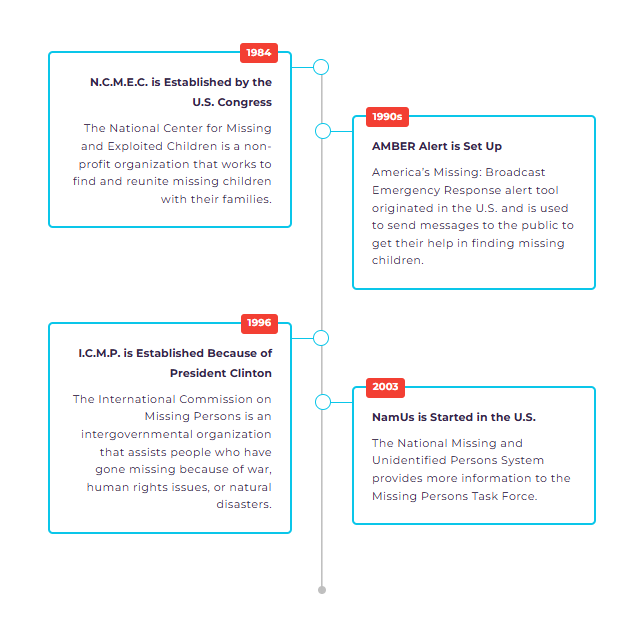
According to the National Missing and Unidentified Persons System (NamUs), between 89% and 92% of reported missing individuals are found each year. However, a significant number remain unaccounted for, leaving their loved ones in perpetual anguish. The circumstances surrounding disappearances vary—some individuals voluntarily leave abusive environments, while others fall victim to abduction, memory loss, or tragic incidents where recovery becomes nearly impossible, such as drownings or natural disasters.
Alaska holds the highest rate of missing persons per capita in the United States, with one out of every 617 residents reported missing. While law enforcement agencies spearhead these investigations, volunteer search and rescue teams also play a crucial role, particularly in cases involving disappearances in remote or wilderness areas.
Origins of Missing Persons Day
The observance of National Missing Persons Day was formally recognized on May 25, 1983, as a national initiative to draw attention to the growing number of unresolved cases. Over the years, it has evolved into a day of remembrance, advocacy, and education, ensuring that missing persons are not forgotten and that families still searching for answers receive the support they need. May 25 is now observed as National Missing Children’s Day.
The impact of a missing loved one extends beyond the initial disappearance. Families endure prolonged grief, holding onto hope while struggling with the unknown. Many become activists, pushing for advancements in forensic science, law enforcement protocols, and public engagement in missing persons cases.
Organizations across the country use this day to share stories, raise awareness on social media, and advocate for better resources. Community members are encouraged to participate by spreading the word, supporting families, and assisting law enforcement through volunteer search efforts or financial contributions to organizations specializing in locating missing individuals.
Resources for Missing Persons Cases
Resource Association for Missing People (RAMP) – non-profit organization aims to raise public awareness about missing people, while providing an all-encompassing resource for those affected.
National Center for Missing & Exploited Children (NCMEC) – the central reporting center for missing children in the U.S. — has a 24/7 hotline and resources for families. 24 Hour Hotline at 1-800-843-5678.
NamUs – the only national repository for missing, unidentified, and unclaimed persons cases, providing a singular resource hub for law enforcement, medical examiners, coroners, and investigating professionals. Phone: 833-872-5176.
Black and Missing Foundation, Inc. (BAMFI) – a non-profit organization bringing awareness to missing persons of color; providing resources and tools to families and educating the minority community on personal safety. Phone: 1-877-97-BAMFI (972-2634).
National Runaway Safeline – 24/7 hotline for youth in crisis aged 12-21 and their families. Phone: 800-RUNAWAY (786-2929)
National Suicide Prevention Lifeline – hotline is available 24/7. Phone: 800-273-8255
National Domestic Violence Hotline – 24/7 resources on identifying abuse, getting help, safety planning and supporting others. Phone: 800-799-SAFE (7233)
National Human Trafficking Hotline – offers services and support to victims of human trafficking. Phone: 888-373-7888 Text HELP to 233733.
National Sexual Assault Hotline – 24/7 support for victims, survivors, and loved ones. Call, chat online, or download the RAINN app. Phone: 800-656-HOPE (4673).
Teen Dating Abuse Helpline – 24/7 support, education and advocacy for teens, young adults and families. Call, text or chat online. Phone: 866-331-9474 Text LOVEIS to 22522.
VictimConnect – resource center is a place for victims to learn about their rights and options confidentially and compassionately. Hotline: 855-4-VICTIM (484-2846)